
SAMPLES OF THE 101
THE UNWRITTEN RULES
Each truth in the book is paired with an original visual intrepretation by artist Valheria Roacha. Here are five to start with.

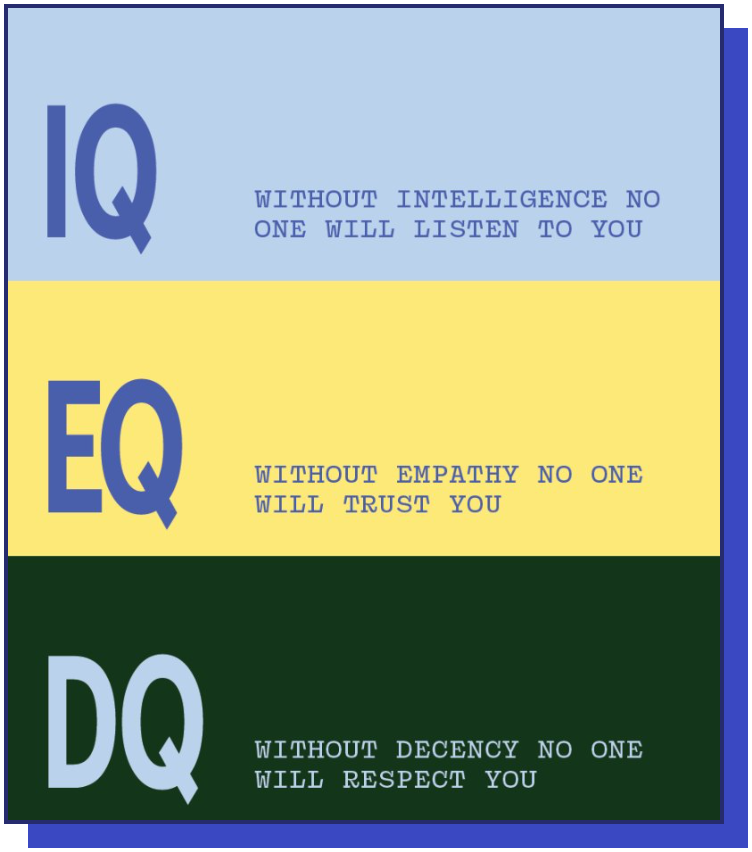
SUCCESS REQUIRES THREE THINGS.
IQ plus EQ plus DQ.
IQ doesn't mean that you need to be the smartest person in the room. It does mean that you need to know something so well that people turn to you when they have questions about a product, an analysis, a customer, or a vendor. You need to pay attention to the details to support the other people around you.
EQ is all about putting others ahead of yourself. Understanding how others think, feel, and behave immediately gives you credibility because work is about serving others. The closer you are to meeting the needs of the people you serve, the more valuable you'll be to your organization.
DQ is something that is often in short supply these days. Being decent means speaking, acting, and behaving with respect, being mannerly, and focusing on the dignity of others. When your primary purpose is money, attention, adulation, or any derivation of these narcissistic characteristics, then by definition you lack decency.
Here's the twist. When you finished school and joined the workforce, you probably believed you already had a high IQ, EQ, and DQ.
But at work, you probably have a pretty low IQ because you don't yet know the intricate details about your organization's products and services.
Your EQ will also be very low until you deeply understand the problems of the people you serve. The good news is that your DQ can be high on day one.
Be patient. In time, your success is assured.
1 + 1 + 1 = 10.
(Maybe not today, but soon.)
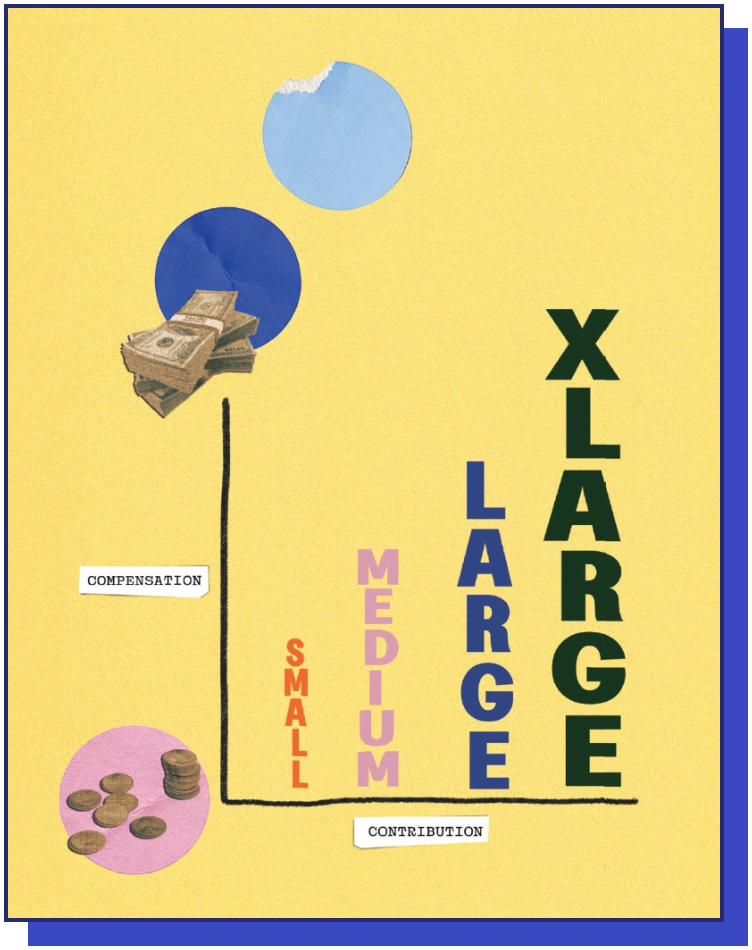
CONTRIBUTION DETERMINES COMPENSATION
You give to get.
One young graduate from Amherst shared with me that their ideal job was a remote job where they could continue to live their life as they wanted. This meant long walks on a sunny day, extensive travel, and plenty of time to paint and play music.
I asked them to name some jobs that allow you to do that because I’d like one too. Unfortunately, the nature of work is that you exchange your time, attention, and skill for compensation. No one gets paid for potential. You are paid for value created, problems solved, or risk mitigated, not for how talented you might be.
Work will expand to the parameters you set. If you are working 60–80 hours per week, then you should be highly compensated. If you are working that much and you have no control over when the work must be done (like staying up until 4 a.m.) or you can’t plan a weekend dinner with your significant other, then the exchange isn’t fair and reasonable.
Only you can decide what is a fair exchange. I once worked in a well-compensated job with good benefits, but I had to travel 40–45 weeks of the year. I used to joke that I didn’t live in Atlanta; I lived at Hartsfield-Jackson International Airport.
For a time, this was a good trade for me—until it wasn’t. The beauty of most economies is that you have the freedom to choose your occupation, start your own business, or change jobs to optimize the trade of your time, attention, and skill.
Make a trade that works for you.
COMPLEXITY IS COMMONPLACE
Clarity is creativity.
My family is full of engineers: mechanical, chemical, electrical, and even optical. At family gatherings, they spoke in a language constructed by them and reserved for them.
Now, I had a choice: I could grab a beer and ignore them, or I could try to make sense of what they were saying.
I chose the latter, but it wasn't easy.